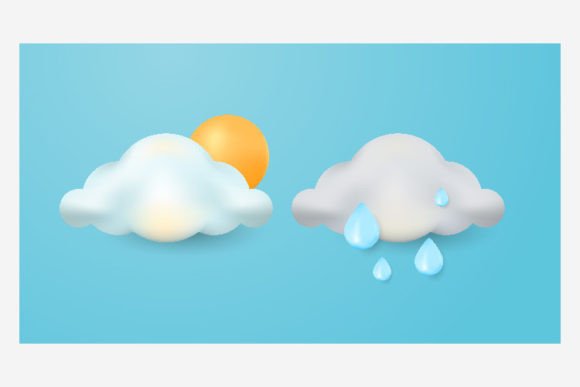
3D Realistic Cloudy and Sunny Cloud Design for Creative Projects
For designers, illustrators, and content creators looking to elevate their visual storytelling, the 3D Realistic Cloudy and Sunny Cloud design offers a compelling solution. This digital asset is crafted with precision in Adobe Illustrator, delivering a high-quality, editable graphic that can seamlessly integrate into a variety of creative workflows. Whether you're working on branding materials, website mockups, or educational resources, understanding how this design performs and where it shines can help you make informed decisions about its use.
What Is 3D Realistic Cloudy and Sunny Cloud?
The term 3D Realistic Cloudy and Sunny Cloud refers to a digital illustration that captures the natural beauty and texture of both overcast and clear-sky cloud formations. Unlike flat or cartoonish representations, this design uses advanced layering, shading, and perspective techniques to mimic real-world clouds. The result is a visually rich element that can add depth, realism, and mood to your projects without requiring complex 3D modeling software.
This particular design is created using Adobe Illustrator, a vector-based tool known for its flexibility and scalability. Being in EPS format ensures that users can scale the image without loss of quality, making it suitable for print or digital media alike. Additionally, the package includes a JPG preview for quick reference and RGB color profiles for consistent rendering across screens and devices.
Key Characteristics and Practical Value
- Vector-Based Format (EPS): Ideal for editing and scaling, allowing users to customize shapes, colors, and sizes easily within Adobe Illustrator or other compatible software.
- JPG Preview: Provides a ready-to-use image for immediate placement in non-vector environments such as PowerPoint presentations or social media posts.
- RGB Color Profile: Ensures vibrant and accurate color display on digital platforms, which is essential for web designers and digital marketers.
- High Quality: The design is rendered with attention to detail, making it suitable for professional-grade applications.
These features collectively offer a balance between artistic appeal and technical functionality. The ability to edit each component of the cloud formations is particularly valuable for those who need to adapt visuals to specific brand guidelines or project requirements.
Who Can Benefit from This Design?
The 3D Realistic Cloudy and Sunny Cloud design appeals to a broad audience but is especially useful for professionals in certain fields:
- Graphic Designers: Those who frequently work with weather-themed visuals or require atmospheric elements for illustrations will appreciate the ease of customization and clean file structure.
- Digital Marketers: Can leverage these assets in promotional banners, email headers, or landing pages to convey moods like optimism (sunny) or caution (cloudy), aligning with campaign messaging.
- Web Developers: The scalable nature of the EPS file makes it ideal for responsive web design, ensuring sharp visuals at any resolution.
- Educators and Presenters: Use the images in slides or infographics to illustrate meteorological concepts or seasonal themes in a visually engaging way.
- Bloggers and Content Creators: Incorporate the design into blog headers, social media posts, or infographic templates to enhance visual storytelling.
Its dual representation—both cloudy and sunny—makes it adaptable to different contexts. For instance, a health blogger might pair the sunny cloud with positive messages about wellness, while an environmental organization could use the cloudy variant to emphasize topics like climate change or air pollution.
Real-World Performance and Usability
In practice, the 3D Realistic Cloudy and Sunny Cloud design demonstrates strong usability. Users familiar with Adobe Illustrator can quickly modify individual layers, adjust transparency, or even re-color entire sections to match their brand's palette. This level of control is rare in pre-made graphics and significantly reduces the time required for customizations.
One notable strength is its compatibility with various design ecosystems. The EPS file works well in InDesign, Photoshop, and even Figma via import tools. The inclusion of a JPG preview also streamlines workflow by enabling fast layout testing before final edits are made.
However, the effectiveness of the design depends heavily on the user’s familiarity with Adobe Illustrator. While the files are easy to edit, beginners may find the layer structure complex at first glance. A brief tutorial or documentation would be helpful for less experienced users to maximize the design's potential.
Quality and Long-Term Reliability
When assessing the 3D Realistic Cloudy and Sunny Cloud design, quality is one of its standout attributes. The attention to detail in lighting, shadowing, and texture gives the illusion of depth and realism that many stock images fail to achieve. The high-resolution JPG preview is also well-rendered, preserving clarity even when zoomed in.
Adobe Illustrator’s vector foundation ensures long-term reliability. As screen resolutions and print standards evolve, vector graphics remain crisp and distortion-free. This means the design won’t become obsolete due to technological advancements, unlike raster-only assets that degrade when scaled up.
From a maintenance standpoint, the design is relatively low-effort. Once imported into a project, it requires minimal tweaking unless specific stylistic changes are desired. This makes it a reliable resource for recurring use in templates, branding, or ongoing campaigns.
Flexibility and Customization Options
Flexibility is another key advantage. The design supports a range of modifications including:
- Changing the background to simulate different sky conditions.
- Adjusting cloud density and shape for more dramatic or subtle effects.
- Combining the two cloud types in a single composition to reflect transitions from day to night or changing weather patterns.
For example, a marketing team launching a new line of outdoor gear might create a split-screen layout: one side showing the sunny cloud for daytime activities and the other with the cloudy version to suggest versatility in all weather conditions. Such a presentation can communicate product value more effectively than text alone.
Moreover, because the design is delivered in a layered EPS file, users aren't limited to just altering colors. They can isolate specific parts of the cloud formation to blend with other graphics, animate in After Effects, or even print as part of a larger artwork. This opens up creative possibilities beyond simple static use.
Presentation and Effectiveness
Visually, the 3D Realistic Cloudy and Sunny Cloud design excels. It adds a touch of authenticity to any backdrop or scene without overwhelming the composition. Its realistic textures and soft edges allow it to blend naturally with other elements, whether they’re photographs, icons, or typography.
Effectiveness, however, varies based on context. In some cases, such as minimalist web designs, the detailed nature of the clouds may clash with the overall aesthetic. In others, like children's books or travel brochures, the richness of the design enhances the narrative and emotional impact.
Professional observations suggest that the best results come when the design is used purposefully rather than randomly. For instance, placing the sunny cloud behind a logo can subtly reinforce a message of positivity, while the cloudy variant might serve as a background for a “Stay Prepared” theme in product packaging.
Possible Limitations and Recommendations
Despite its strengths, the 3D Realistic Cloudy and Sunny Cloud design isn't without limitations. One major consideration is its dependency on Adobe Illustrator for full customization. If you don’t have access to the software or lack the skills to manipulate vector files, you’ll be restricted to the provided JPG preview. In such cases, it may be more practical to look for PNG or SVG alternatives that are compatible with free or open-source tools.
Another limitation is the learning curve associated with managing layered vector files. Beginners may struggle with separating elements or applying gradients correctly. To overcome this, consider pairing the design with beginner-friendly tutorials or investing a bit of time in mastering basic Illustrator functions related to layer management and object grouping.
Recommended use cases include:
- Weather-themed websites or apps.
- Backgrounds for editorial layouts or magazine spreads.
- Visual metaphors in business presentations or infographics.
- Printable posters, flyers, or brochures requiring dynamic skies.
Conclusion and Fit for Your Project
If you're seeking a versatile and high-quality cloud design that balances realism with ease of use, the 3D Realistic Cloudy and Sunny Cloud design is worth considering. Its Adobe Illustrator origin provides unmatched flexibility, while the JPG preview ensures you can start using it right away. However, the decision should be based on your current skillset, tools, and the specific needs of your project.
For teams already using Adobe products, this design can streamline production and reduce the need for outsourcing. For freelancers and solo creators, it offers a cost-effective way to maintain a polished look without spending hours designing from scratch. But if you rely on non-vector tools or prefer simpler assets, you may want to explore alternative options that better fit your workflow.
Ultimately, the 3D Realistic Cloudy and Sunny Cloud design is a powerful addition to any creative toolkit, provided it’s used thoughtfully and aligned with your design goals.